
Yard Odor Removal: 3 Proven Steps for 2026 Freshness
Why Yard Odor Removal Matters for Your Outdoor Space
Yard odor removal is the process of eliminating unpleasant smells caused by pet waste, rotting vegetation, and bacterial growth.
Quick Answer: The Most Effective Yard Odor Removal Methods
- Remove the source – Pick up all solid pet waste first.
- Use enzymatic cleaners – Natural enzymes break down compounds like uric acid.
- Apply regularly – Weekly for multi-dog homes, bi-weekly for single pets.
- Target all surfaces – Treat grass, concrete, gravel, and patios.
- Time it right – Spray around sunset and mist with water for penetration.
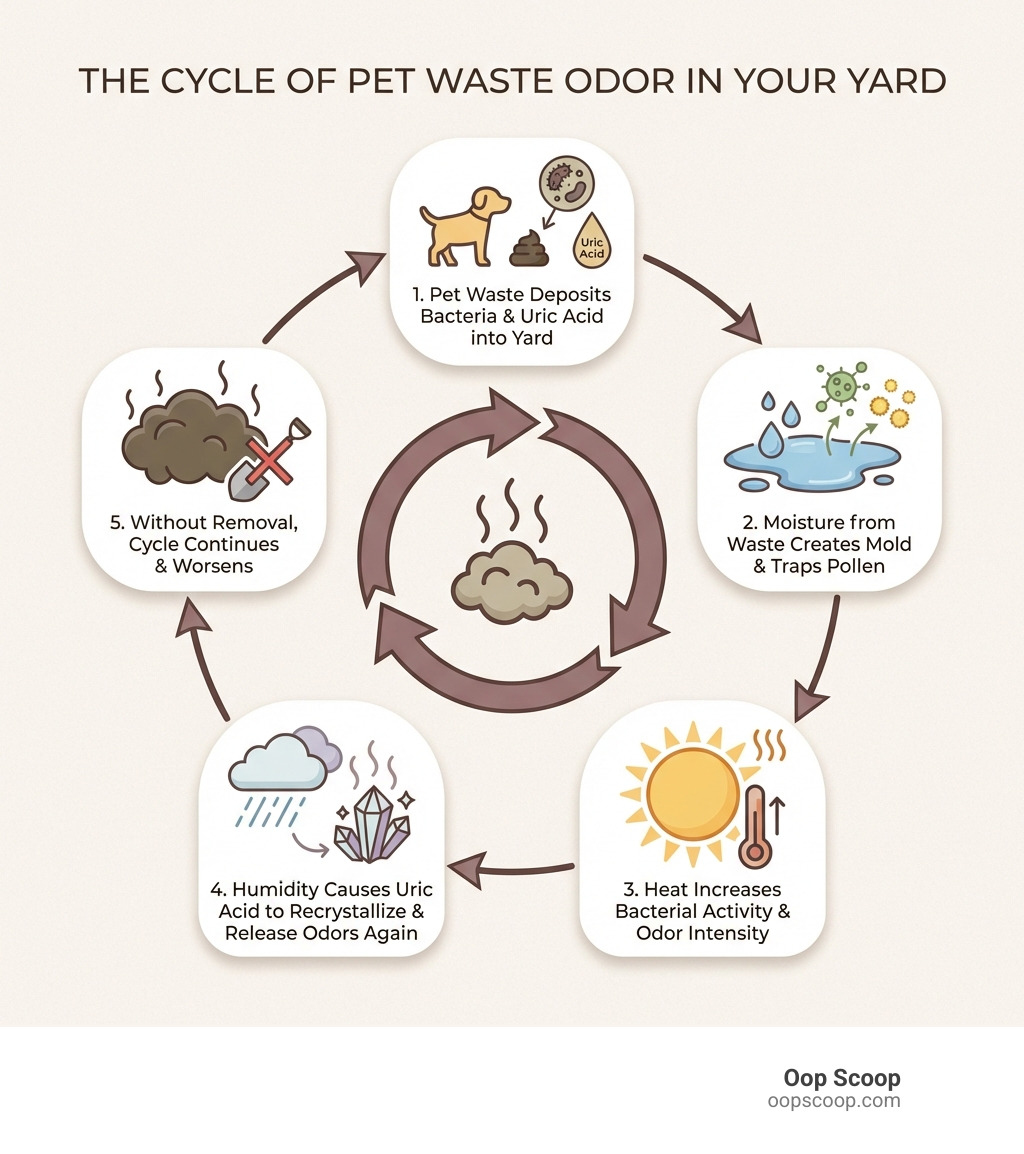
Scented sprays and candles only mask odors temporarily. On humid days, uric acid from pet urine recrystallizes, releasing smells all over again. Pet waste also traps pollen and encourages mold growth. Traditional methods like baking soda or vinegar offer temporary relief but don’t eliminate the source. Lime can work but poses health risks to families and pets.
Yard odor removal doesn’t have to be complicated. By eliminating odors at the source, you can reclaim your outdoor space. I’m Jessee Beardsley, owner of Oop Scoop in Delaware. We’ve helped hundreds of homeowners solve these challenges through professional waste cleanup and targeted treatments.
Identifying the Common Sources of Yard Odor
To effectively tackle smells, we must identify their origins. While pet waste is the primary culprit, other factors contribute to yard odors.
Common sources include:
- Pet Urine and Stool: Urine contains uric acid, which recrystallizes and releases odors during humidity. As discussed in The Importance of Proper Dog Poop Cleanup, leaving waste creates a smelly hazard. The Surprising Truth About Dog Poop: It’s Not Fertilizer, It’s Hazardous! explains why this waste is more than just a nuisance.
- Rotting Vegetation: Decomposing leaves and grass clippings can create musty or sulfurous smells.
- Mold and Mildew: These thrive in damp areas. Dog waste retains moisture, creating breeding grounds for mold that worsens allergies.
- Stagnant Water: Clogged gutters or puddles breed bacteria and algae, leading to swampy odors.
- Bacterial Activity: Bacteria break down organic matter and release volatile compounds. Warmer weather intensifies this activity, dropping air quality.
Understanding these sources is the first step toward effective yard odor removal.
The Science of Yard Odor Removal: Masking vs. Elimination
When faced with a stinky yard, our first instinct might be to reach for a scented spray or light a citronella candle. We’ve all been there! But as experts in yard odor removal, we can tell you these methods, while providing momentary relief, are ultimately a losing battle. This brings us to a fundamental distinction: odor masking versus odor elimination.
Odor Masking: This approach simply tries to cover up one smell with another, typically a stronger, more pleasant fragrance. Think of air fresheners or scented sprays. While they might make your yard smell like “fresh linen” for a few minutes, they don’t actually remove the source of the bad odor. Instead, they create a “fragrance layering” effect, where the two smells eventually mingle, often resulting in an even more unappealing scent. As Consumer Reports rightly points out in their Guide to Eliminating Nasty Household Odors, “Experts say the solution isn’t to cover up the underlying stink but to take the right steps to eliminate it altogether.” This is especially true for persistent outdoor odors like pet urine, where the uric acid can recrystallize on humid days, releasing its pungency again and again, no matter how many times you spray air freshener.
Odor Elimination: This is the gold standard for yard odor removal. True elimination means breaking down and neutralizing the odor-causing molecules at their source. This is where science comes into play, particularly with enzymatic cleaners. These products don’t just add another scent; they actively destroy the compounds responsible for the bad smells.
Here’s a quick comparison:
| Feature | Odor Masking Agents | Enzymatic Odor Eliminators |
|---|---|---|
| Mechanism | Covers up bad odors with a stronger fragrance | Breaks down and neutralizes odor-causing molecules |
| Effectiveness | Temporary, often leads to mixed, unpleasant smells | Permanent removal of the odor source |
| Key Ingredients | Synthetic fragrances, volatile organic compounds | Natural enzymes, live bacteria, Yucca |
| Long-term Solution | No, odors return when masking agent dissipates | Yes, eliminates the source for lasting freshness |
| Pet Safety | Can contain irritants; may encourage remarking | Generally safe when used as directed; discourages remarking |
Understanding this difference is crucial for anyone serious about effective yard odor removal. We want to eliminate the problem, not just perfume it!
How Enzymatic Cleaners Work to Eliminate Pet Odors
Enzymatic cleaners are biological powerhouses designed for true yard odor removal. They contain natural enzymes and beneficial bacteria that target organic compounds in pet waste.
- Targeting the Source: Enzymes penetrate surfaces like grass and concrete to reach embedded odor molecules.
- Biological Action: Enzymes break down complex molecules into non-odorous gases like carbon dioxide. Live bacteria then consume the remaining organic matter.
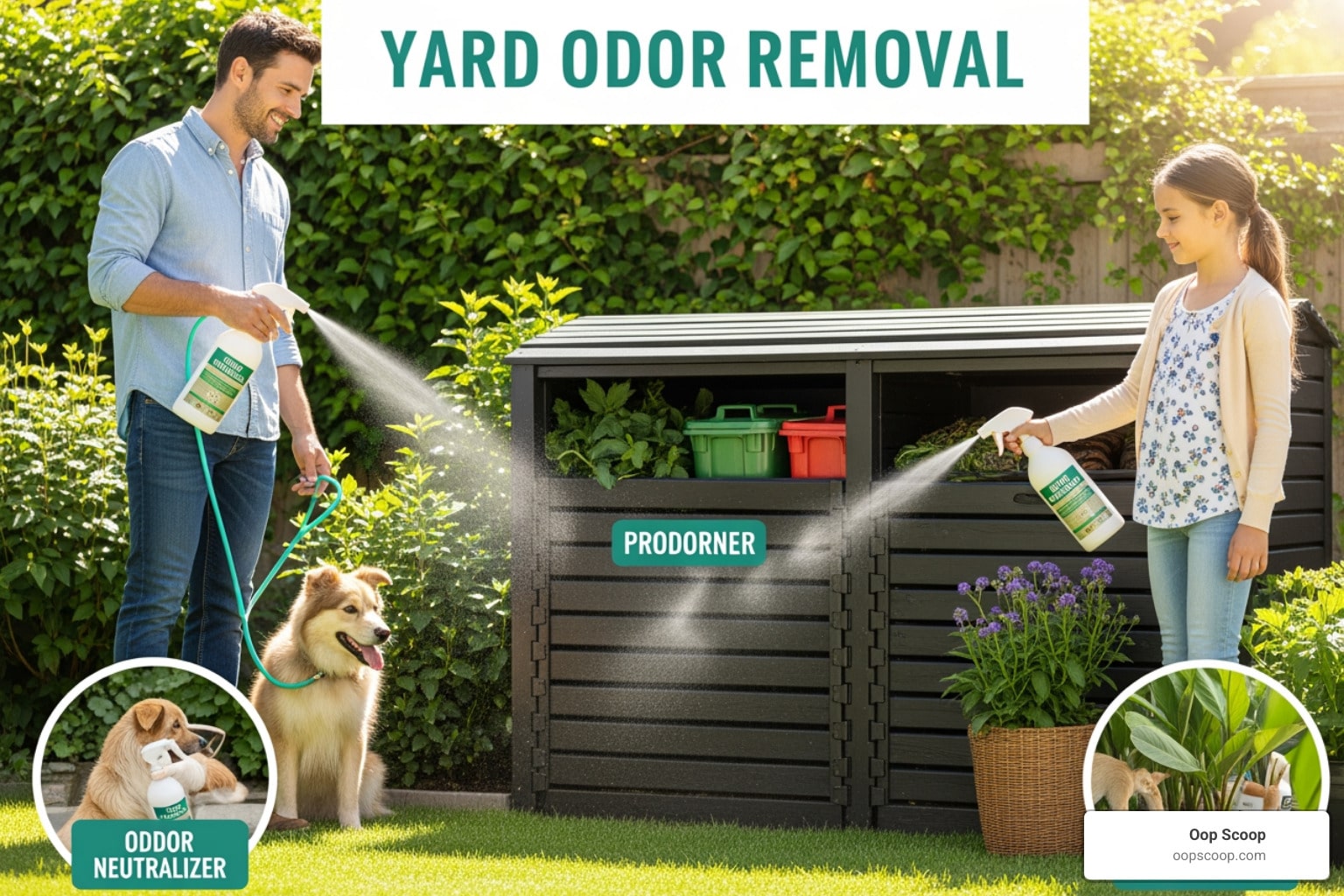
- Deep Penetration: Using a hose-end sprayer ensures even distribution. Misting the area with water afterward helps microorganisms stay active longer.
- Long-Lasting Results: By destroying the molecules, the smell is permanently eliminated.
We recommend applying treatments around sunset to prevent the solution from drying too quickly, a key part of our Delaware Yard Deodorizer for Dogs services.
Effective Surfaces for Yard Odor Removal Treatments
Modern enzymatic eliminators are versatile and safe for various surfaces:
- Grass: Penetrates soil to break down residues. See Is Dog Poop Good or Bad for My Grass? for more on lawn health.
- Artificial Turf: Flushes out contaminants trapped in synthetic fibers.
- Gravel and Concrete: Neutralizes odors absorbed into porous driveways and walkways.
- Brick and Stone: Seeps into pores of patios and retaining walls.
- Wood: Safe for most decks and fences (test a small area first).
- Patio Furniture: Effective for accidents on outdoor fabrics.
- Kennels and Dog Runs: Essential for high-traffic pet areas.
Safety Precautions for Outdoor Odor Eliminators
While generally safe, follow these precautions to protect your family and the environment in New Castle County or Cecil County:
- Storage: Keep products out of reach of children and pets.
- Drying Time: Keep pets off treated areas until completely dry.
- Avoid Contact: Prevent ingestion or eye contact; flush with water if contact occurs.
- Aquatic Life: Avoid spraying near fish ponds or natural waterways.
- Surface Use Only: Do not spray directly on animals. For pet health concerns, see Giardia in Dogs: Symptoms, Treatment Guide.
- Test Fabrics: Check for colorfastness on furniture before full application.
Why Regular Waste Removal is Essential for a Fresh Yard
Consistent pet waste removal is the foundation of a healthy yard. At Oop Scoop, we prioritize this for families across Delaware and Maryland.
- Eliminates the Primary Source: Physical removal is the only way to get rid of the bulk of odor-causing bacteria.
- Reduces Allergens: Waste traps pollen and encourages mold growth. Regular removal helps you breathe easier.
- Improves Air Quality: Preventing bacterial buildup keeps the air fresher during summer.
- Deters Pests: Removing waste cuts down on flies and mosquitoes that carry diseases.
- Prevents Lawn Damage: As noted in Is Dog Poop Good or Bad for My Grass?, waste burns grass. Prompt cleanup prevents brown patches.
- Safety: A clean yard reduces the risk of tracking bacteria indoors. Our Residential Pet Waste Removal and Professional Dog Poop Pick Up Service keep your space safe.
We handle the dirty work so you don’t have to. For disposal tips, see How to Dispose of Dog Poop.
Frequency and Timing for Yard Odor Removal Success
- Regular Maintenance: Bi-weekly application works for most single-pet homes. Multi-dog households may need weekly treatments. Our Pet Waste Removal Service Newark Delaware offers flexible scheduling.
- Seasonal Adjustments: Increase frequency during hot, humid summer months when bacterial activity peaks.
- Sunset Spraying: Applying at dusk allows the product to stay wet longer, giving enzymes more time to work.
- Hose-End Sprayers: These tools make even application over large areas simple and efficient.
Frequently Asked Questions about Yard Odor Removal
Can DIY solutions like vinegar or baking soda effectively remove yard odors?
DIY solutions like vinegar or baking soda provide only temporary relief. They don’t break down the uric acid crystals that cause persistent smells. Furthermore, the Humane Society warns that strong scents like vinegar can trigger pets to mark the same spot again. Commercial enzymatic cleaners are superior because they biologically digest the odor source.
How often should I apply yard odor treatments for the best results?
- Weekly: Recommended for multi-dog homes or small yards with high traffic. Services like our Middletown Delaware Favorite Pooper Scooper can be paired with these treatments.
- Bi-Weekly: Sufficient for single-pet homes with average-sized yards.
- Weather Dependent: Increase frequency during high heat, humidity, or after heavy rainfall to maintain freshness.
Are yard odor eliminators safe for my plants and lawn?
Yes, most reputable enzymatic products are non-toxic and biodegradable. They break down organic matter into harmless compounds. While safe for grass and shrubs, avoid heavy overspray on delicate flowers. Our City Delaware Pooper Scooper Service prioritizes both effectiveness and environmental safety for your landscaping.
Conclusion
Successful yard odor removal requires moving beyond masking scents to true source elimination. By combining consistent pet waste removal with enzymatic cleaners, you can maintain a fresh, healthy outdoor space.
Enzymatic solutions are the gold standard, safely neutralizing odors on grass, patios, and decks. Regular cleanup is the essential foundation for these treatments to work effectively. Strategic timing, such as sunset application, further ensures long-lasting results.
At Oop Scoop, we help homeowners in Delaware and Cecil County reclaim their yards. From Wilmington to Elkton, our professional services provide the ultimate solution for a clean, landmine-free environment. Ready to enjoy your yard again? Explore our Delaware Yard Deodorizer for Dogs options today.